
Belt-Type Steaming-Shrinking Machine
WPF-WDYS
Belt-Type Steaming-Shrinking Machine · Engineered with the QL Relaxed Vibration-Steaming System
The machine, up close
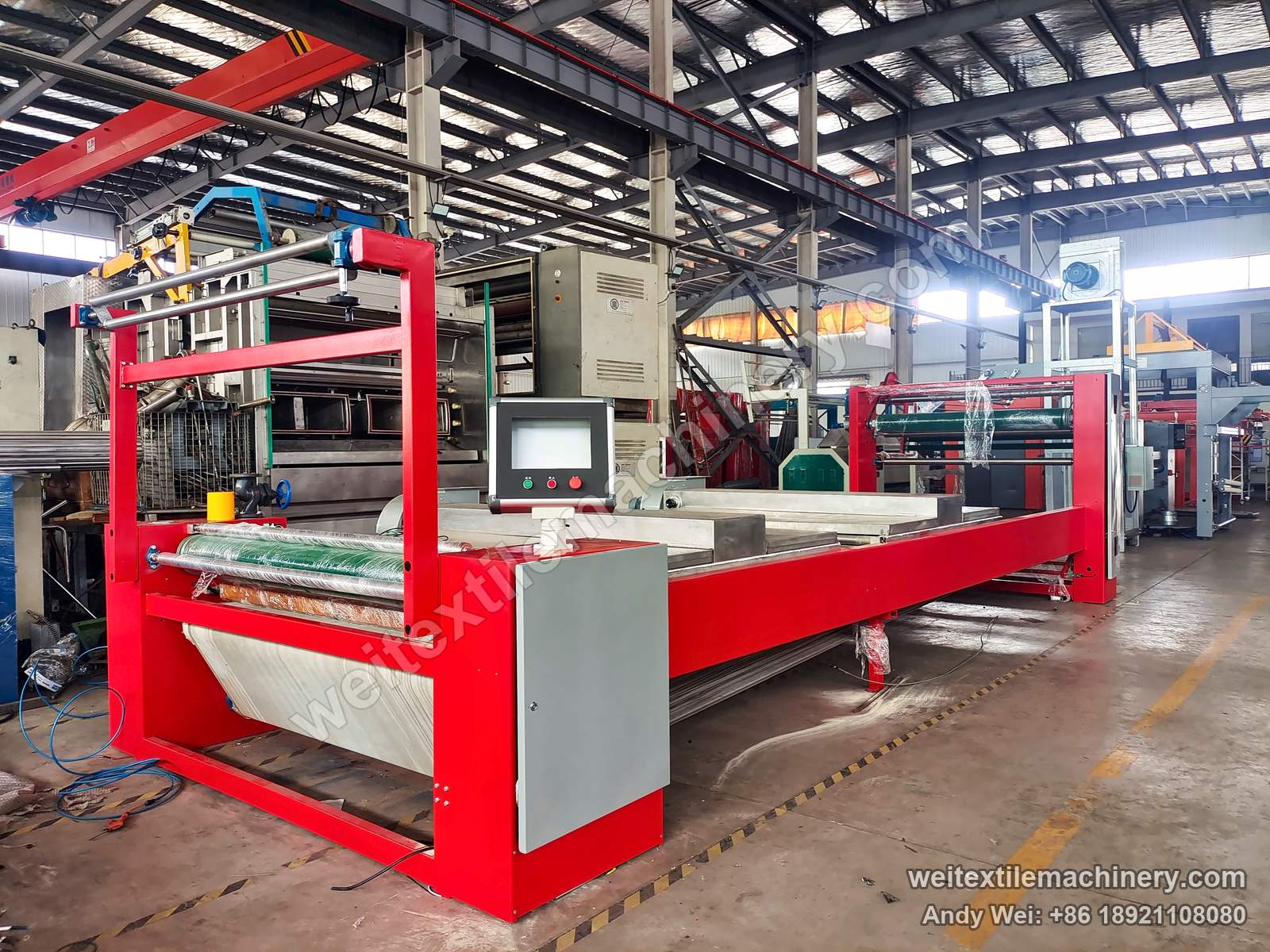
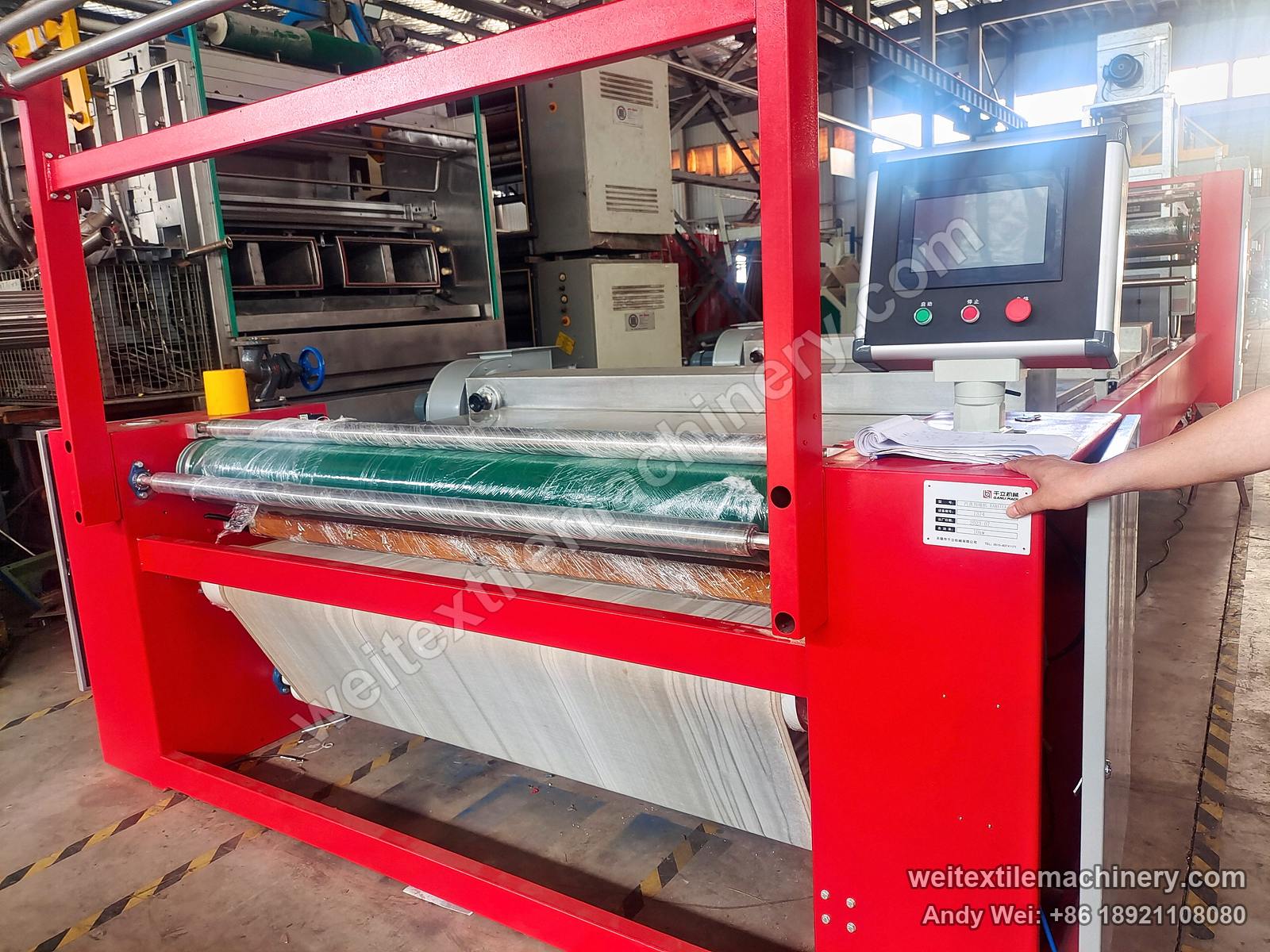
Full view
Key advantages
- QL Relaxed Vibration-Steaming System — overfeeding onto the belt, steaming from beneath, relaxation by vibration and setting by suction cooling follow one another on the mesh belt — warp and weft shrink freely together
- Through-Belt Steaming · Heating Bank Against Condensation — steam from the spray pipes passes straight through the mesh belt into the fabric; once it has crossed the fabric, the heating bank carries out secondary vaporisation and the suction unit draws it off at once — condensate formation is intercepted at source, and the fabric surface is less prone to water marks
- Two Independent Steaming Boxes — each box has its own steam supply and its own suction; the boxes run singly or together, with the steam volume set in the recipe
- Overfeed with Settable Shrinkage — shrinkage setting 0–15%; the fabric lands on the belt with length in hand — the overfeed allowance determines how far it shrinks
Fabric results (before / after)
Threading diagrams
QL Relaxed Vibration-Steaming System
- Overfed onto the Belt — the feed roller runs faster than the belt, so the fabric lands relaxed and with surplus length, leaving the warp room to shrink
- Steam from Beneath the Belt — steam rises from below the belt and passes through the mesh into the fabric; in the moist heat the fibres relax and the stresses left by weaving and finishing are released
- Relaxation by Vibration — the belt vibrates; the fabric relaxes and shrinks on it, in warp and weft together
- Set by Suction Cooling — suction cools the fabric before delivery, and the relaxed state is set at once
Product overview
The WPF-WDYS carries the fabric on a mesh belt through three stages — steaming, relaxation and cooling. From start to finish it is held by no pins and no clips and is under no draw, so warp and weft are free to shrink together. Residual shrinkage is released before the fabric leaves the mill.
The QL Relaxed Vibration-Steaming System divides the process into four steps: the fabric is overfed onto the belt, steam passes through it from beneath the belt, the vibrating belt lets it relax and shrink, and suction cooling sets it before delivery — all four steps take place without tension.
Two steaming boxes are standard; they run singly or together, and a one-box version is available. Suited to the steam shrinking of wool fabrics, knitted fabrics and high-stretch fabrics, as well as silk and cotton fabrics; placed ahead of decatizing.
Applications
Key specifications
| Working width | 1,800 mm |
|---|---|
| Steaming boxes | 2 (1 as an option) |
| Belt speed | 0–30 m/min |
| Shrinkage setting | 0–15% |
| Steam pressure | 4–5 bar |
| Compressed-air pressure | 5–6 bar |
| Installed power | 10 kW |
| Overall dimensions (L × W × H) | 9,285 × 3,080 × 2,320 mm |
Optional features
- Fabric Delivery — saddle delivery or delivery to a trolley, as options
Full configuration notes, the complete feature list and selection advice — put together for your line and sent straight to you.
Request the full technical fileAll technical parameters stated in this document are measured under ideal operating conditions; actual performance may vary with fabric characteristics, process settings and on-site conditions. The manufacturer reserves the right to introduce technical improvements without prior notice.
Other machines for the same station
This station can be done in more than one way. Each suits a different case — choose by your fabric and output.
Pre-owned machines for this station
Pre-owned European machines for the same station — fully rebuilt to order, and upgraded if you wish.
Common problems in dry finishing
Real questions from the mill floor — and how we answer them.
Width drifts on belt-type shrinking — how do I choose between pin-chain and belt-type?
Width control is the dividing line between the two.
What is a steam preshrinking machine for, and why do garment and fabric mills need it?
A steam preshrinking machine releases the latent relaxation shrinkage locked inside a fabric before it leaves the mill, so the cloth will not shrink and distort the first time a finished garment is washed.
Fabric shrinks the first time a finished garment is washed — how do I settle that before it leaves the mill?
Shrinkage depth is set by the independent overfeed system — warp overfeed is precisely controllable, balanced against surface flatness.
How do preshrinking and decatizing relate to each other — can I do just one and skip the other?
Pre-shrinking and decatizing are two sequential steps on the line, not an either-or choice.
How is the preshrink ratio adjusted, and what range can it be controlled within?
Preshrink ratio is set mainly through the independent overfeed system — the amount of warp overfeed fed in determines how deep the fabric retracts, working together with steam volume, pressure and suction intensity.
Does the preshrinking machine work by direct steam injection?
Yes — steam preshrinking machines work by direct steam injection through the fabric.
Which preshrinking machine should be used for knit fabric — is the pin-chain type (WPF-LTYS) only for woven fabric, or can it handle knits too?
For knit fabric, the net-belt type (WPF-WDYS) is the preferred choice; the pin-chain type (WPF-LTYS) can also process knits, but that is not its primary use.
What's the difference between steam preshrinking and washing the fabric?
The two work through different mechanisms.
What can the WPF-WDYS do for your line?
Tell us your fabric, weight and output — we will come back with a process proposal and a quotation.