
Weft Straightener
WPF-ZW
Weft Straightener · Engineered with the QL Pin-Wheel Transverse-Tension Straightening System
The machine, up close
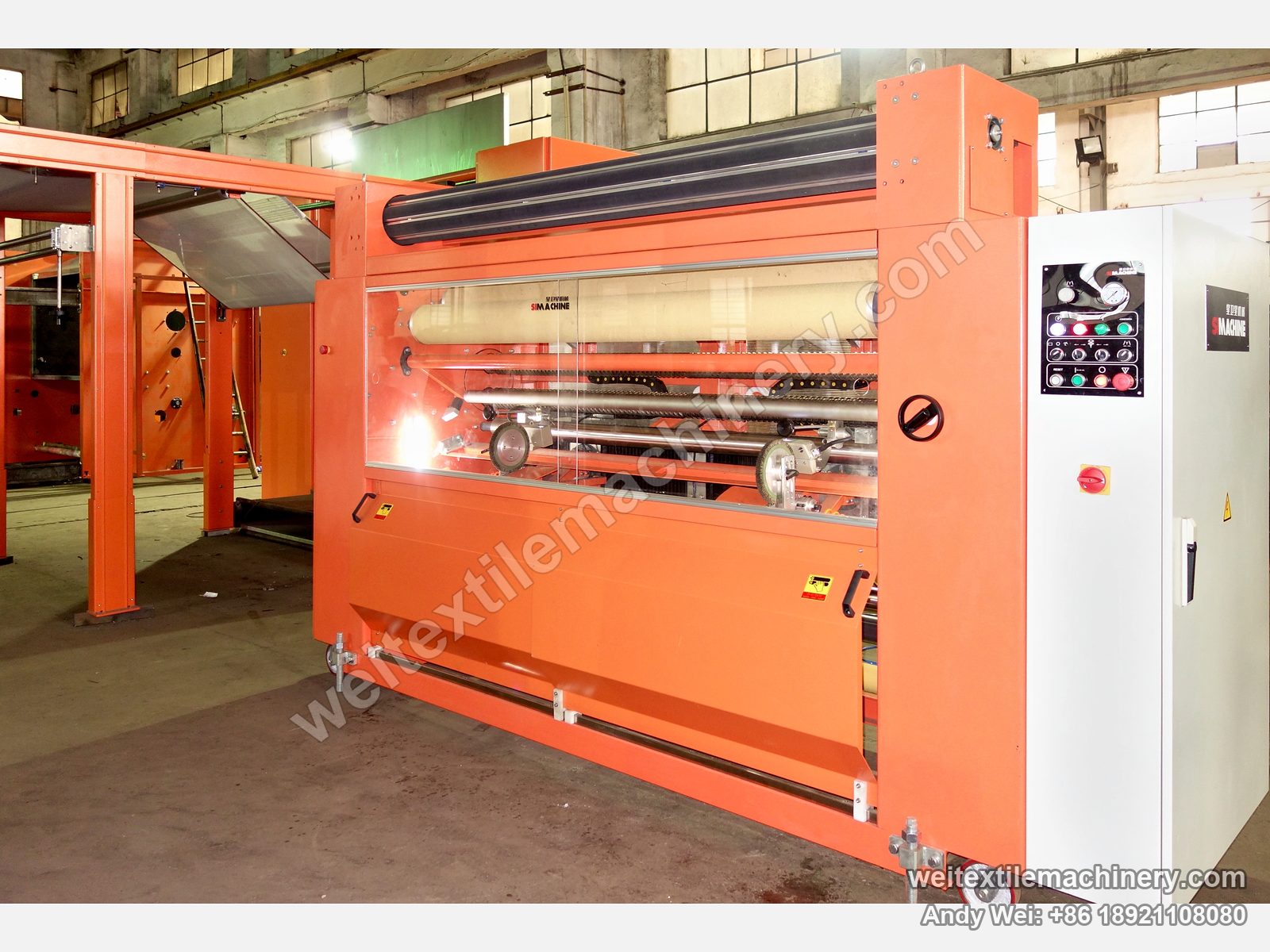
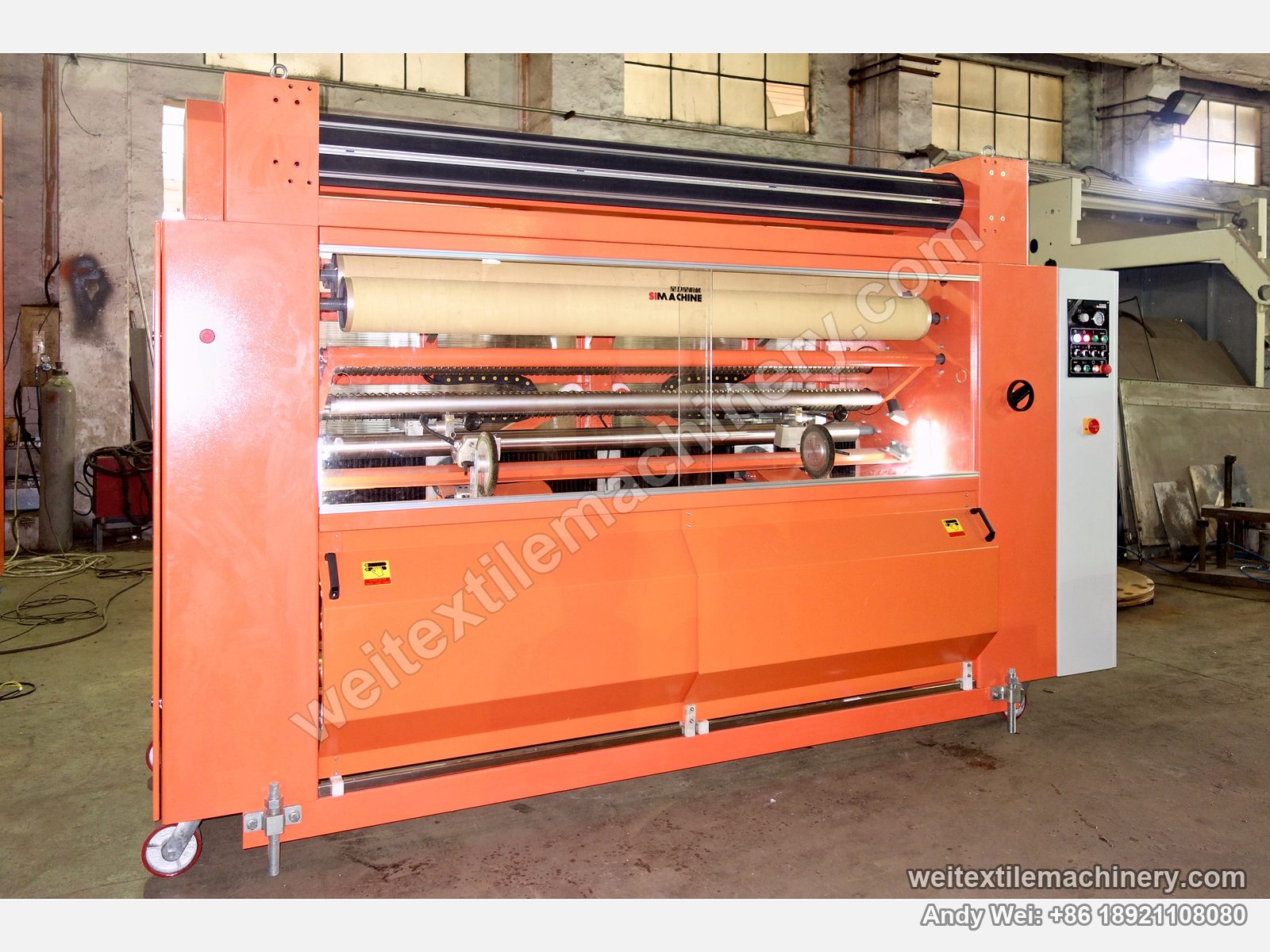
Full view, rollers visible through the window
Key advantages
- QL Pin-Wheel Transverse-Tension Straightening System — two pin wheels that turn freely hold the selvedges and open outwards symmetrically, pulling the weft straight across the width — skew, bow, S-shaped and W-shaped distortion all straightened
- Ø800 mm Large-Diameter Pin Wheels · Large Wrap Angle — the large wheel diameter provides the transverse stretching tension — the higher the tension, the better the skew correction
- Transverse Tension Setting — transverse tension is set at a pressure regulator and read directly from a gauge
- Automatic Selvedge Sensing · Automatic Wheel Traverse — the pinned width of the fabric is sensed and a separate motor traverses the pin wheels — the fabric runs centred
Fabric results (before / after)
Threading diagrams
QL Pin-Wheel Transverse-Tension Straightening System
- Selvedge Holding — both selvedges are held on the pin plates of the Ø800 mm wheels, which turn freely without resistance
- Symmetrical Opening — the two wheels spread apart symmetrically of their own accord when the machine starts; the gap between them is greatest at the foot of the wheels, and that is where the weft is pulled straight across the width
- Closing at Stop · Automatic Braking — the wheels come back together of their own accord when the machine stops, and are braked automatically when it stops from high speed
- Opening Varies with the Fabric — transverse tension is held at its set value while the wheel opening varies automatically with the elasticity of the fabric
- Overload Protection — should a sudden change in fabric width push the transverse pull too high, a spring-loaded relief automatically takes off the surplus, sparing the mechanism
Product overview
The WPF-ZW holds both selvedges on two large-diameter pin wheels that turn freely and open outwards symmetrically. Weft that is skewed, bowed, or distorted into an S or W shape straightens of its own accord under transverse tension and lies square to the warp once more.
The QL Pin-Wheel Transverse-Tension Straightening System uses Ø800 mm large-diameter pin wheels to provide the transverse stretching tension. Heavy qualities, and qualities whose weft is hard to read optically, are straightened just the same.
Fabric can be straightened dry or wet. The machine is installed at the infeed of drying, decatizing, pin-chain steaming-shrinking and similar machines, so the straightened weft is set straight away — preventing leg twist after the garment is washed.
Applications
Key specifications
| Working width | 1,800 mm |
|---|---|
| Maximum speed | 80 m/min |
| Pin-wheel diameter | 800 mm |
| Compressed-air supply pressure | 6 bar |
| Overall dimensions (L × W × H) | 3,518 × 1,000 × 2,100 mm |
Optional features
- Pin Plates — plates with different pin types, selected to suit the fabric
Full configuration notes, the complete feature list and selection advice — put together for your line and sent straight to you.
Request the full technical fileAll technical parameters stated in this document are measured under ideal operating conditions; actual performance may vary with fabric characteristics, process settings and on-site conditions. The manufacturer reserves the right to introduce technical improvements without prior notice.
Pre-owned machines for this station
Pre-owned European machines for the same station — fully rebuilt to order, and upgraded if you wish.
Bianco Tramatex SP04 Weft straightener (pin-wheel)
Weft straightener (pin-wheel) · pin-wheel
10 units · Italy
Pre-owned →Corino Normatex Super-N Weft straightener (pin-wheel)
Weft straightener (pin-wheel) · pin-wheel
5 units · Italy
Pre-owned →Corino Weft straightener (photoelectric)
Weft straightener (photoelectric) · photoelectric
2 units · Italy
Pre-owned →M-Tec Weft straightener (pin-wheel)
Weft straightener (pin-wheel) · pin-wheel
2 units · Germany
Pre-owned →Tsuchiya Weft straightener (pin-wheel)
Weft straightener (pin-wheel) · pin-wheel
2 units · Japan
Pre-owned →Cases with this machine
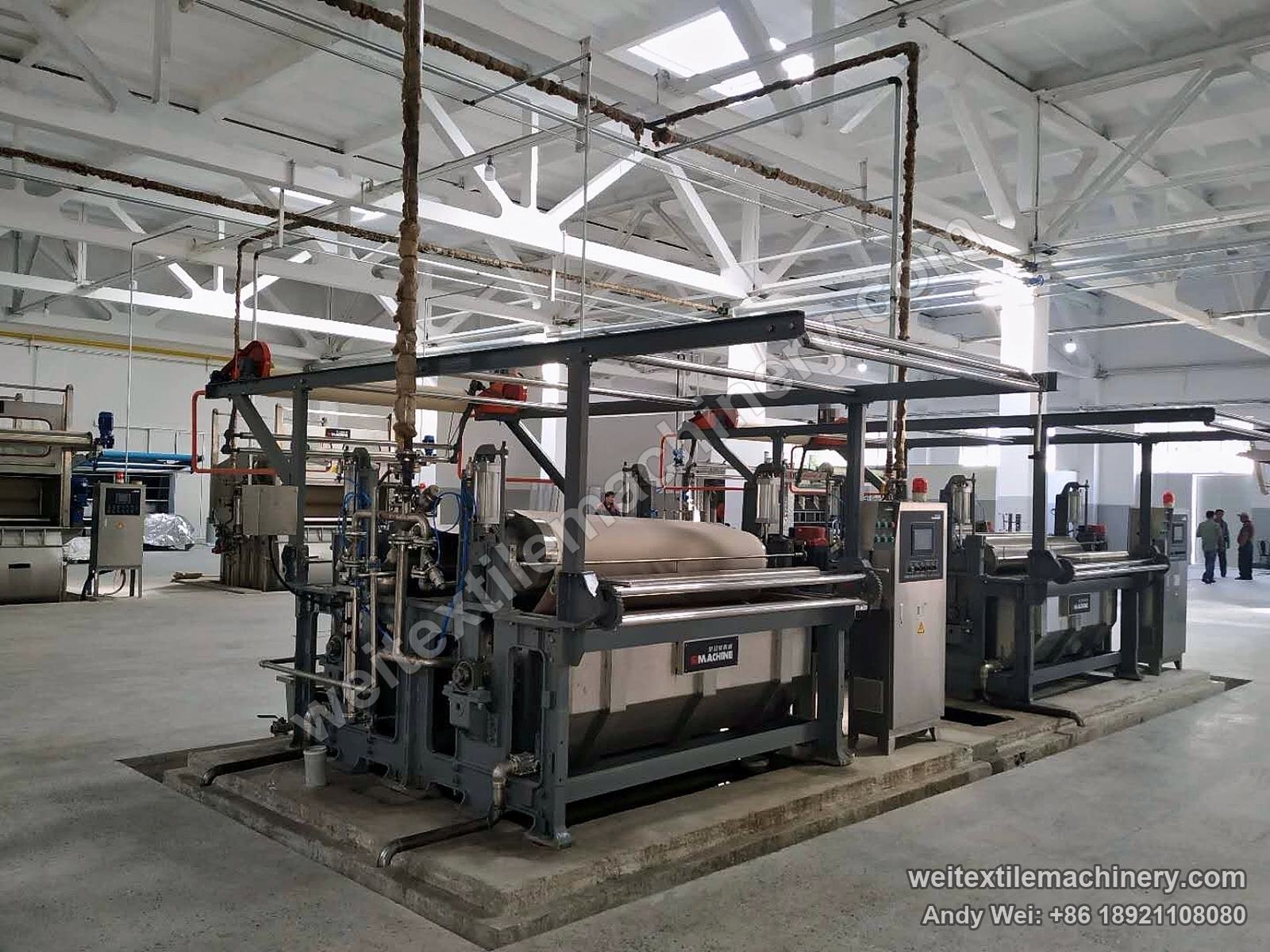
Mills running the WPF-ZW, and acceptance days.
Common problems in dry finishing
Real questions from the mill floor — and how we answer them.
What is a weft straightener, and what does it do?
A weft straightener is dry-finishing equipment that corrects weft skew (yarns running off-square to the selvedge) and weft bow (a curved weft line), squaring up the fabric before it enters steaming-shrinking and…
How do I adjust a weft straightener, and what should I watch out for?
On the WPF-ZW the settings include: transverse tension, set at a pressure regulator and read directly from a gauge; the exit bow roller, adjustable in position so that it can put an opposing bow, leading or trailing…
What parameter settings are considered standard for a weft straightener?
QL's weft straightener, the WPF-ZW, has no universal set of standard parameters — transverse tension is set at a pressure regulator, read directly from a gauge and chosen to suit the fabric, while the wheel opening…
Which manufacturer makes the best weft straightener, and how does QL's compare with imported brands?
Weft straightener makers sit mostly in Europe and China, and fewer still build the pin-wheel type.
If incoming fabric has severe skew/bow, how should I choose a weft straightener for it?
When incoming fabric has severe skew or bow, first work out which it actually is — skew (drifting toward one side) and bow (curving in the middle) call for slightly different correction logic — and measure the actual…
What are the safety operating procedures for a weft straightener?
Safety practices on a weft straightener typically include: stop the machine and lock out power before adjustment, cleaning or repair — never work on it live; never reach a hand or tool between the pin-wheel and the…
How does a weft straightener work?
A weft straightener pulls skewed or bowed weft back square to the warp.
What is the HS code for a weft straightener for import/export?
The correct HS code depends on your country's customs classification rules and declared purpose, and it is not always identical across countries or declaration channels, so we do not publish one fixed code on the site…
What can the WPF-ZW do for your line?
Tell us your fabric, weight and output — we will come back with a process proposal and a quotation.