
Wool Tops Vigoureux Printing Machine
WPF-MTYH
Wool Tops Vigoureux Printing Machine · Engineered with the QL Twin-Roller Printing System
The machine, up close
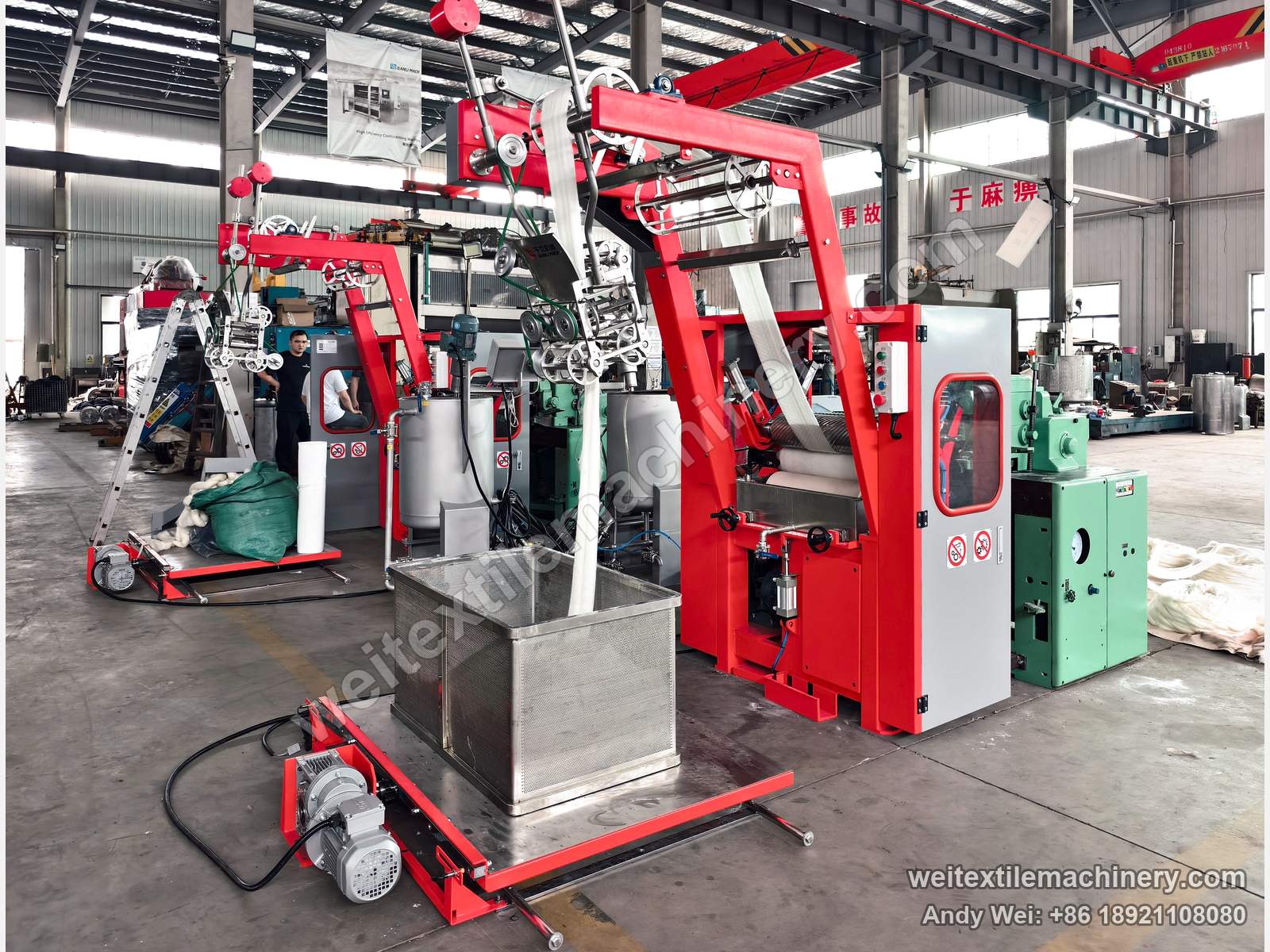
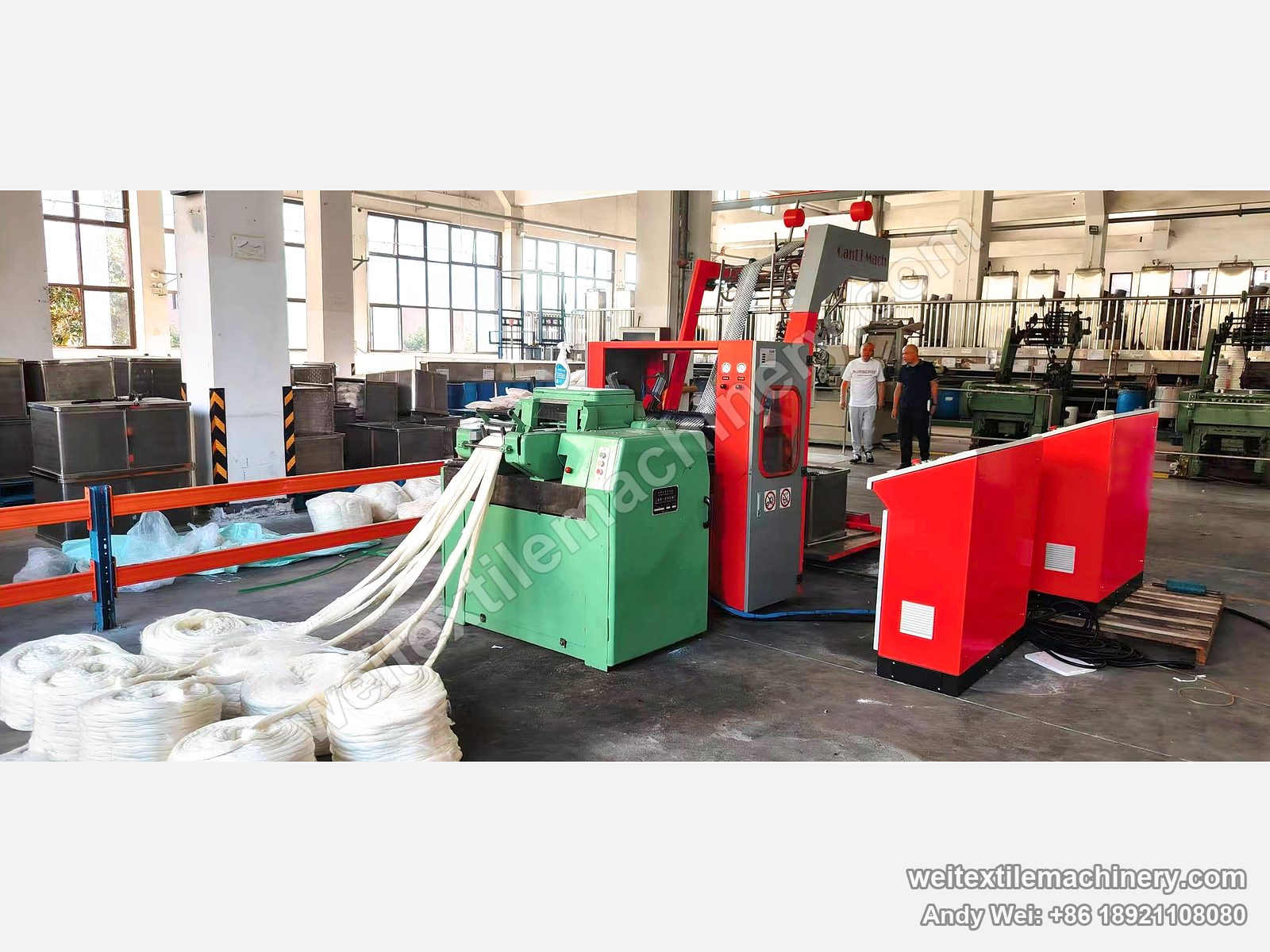
Full view, wool tops led into the box in front
Key advantages
- QL Twin-Roller Printing System — two spirally grooved printing rollers both bear on a single felt-covered roller; the lands print, the grooves leave the web undyed — one pass of the web, two printing nips
- Single- or Twin-Roller Printing — both rollers down print a diamond grid, one roller down prints diagonal bars — two printing styles from one machine; change rollers for a different printed area
- Sliver-Break Stop Motion with Alarm — a sliver break during running stops the machine automatically and raises an alarm — stopped at the break, located on the touchscreen, pieced up and restarted
- Gill-Box Doubling and Feed — the matching gill box doubles 6–14 slivers and drafts them into a thin web; tops in balls or in cans are both accepted — a web drawn thin prints right through
Fabric results (before / after)
Threading diagrams
QL Twin-Roller Printing System
- Spirally Grooved Printing Rollers — the roller face is cut with spiral grooves; the lands print, the grooves leave the web undyed; the wider the land, the wider the printed bar
- Two Rollers on One Felt — both printing rollers bear on the same felt-covered roller, so the web passes two printing nips in a single pass
- Opposite-Hand Crossing — the two rollers are grooved in opposite hands, and their two sets of diagonal bars cross on the web as a diamond grid
- Independent Loading — each printing roller is loaded by its own pneumatic cylinder, with adjustable pressure; loading both rollers or just one changes the printing style
Product overview
The WPF-MTYH dyes the top locally: the web passes in turn through the nips between two spirally grooved printing rollers and a felt-covered roller — the lands between the grooves print, the grooves leave the web undyed. Dyed and undyed in alternation, the printed top blends colour with white at recombing and spins into mélange yarn.
The two printing rollers are grooved in opposite hands and each is loaded by its own pneumatic cylinder: with both rollers down the web is printed in a diamond grid, with one roller down in diagonal bars — two printing styles from one machine. If a sliver breaks during running, the machine stops automatically and gives an alarm; dye liquor is fed automatically, circulated and agitated — continuous running with no topping up by hand.
For pure wool tops, man-made fibre tops and blends, fed from balls or cans; used together with a gill box, steam-fixation equipment and a wool tops backwashing line.
Applications
Key specifications
| Slivers fed | 6–14, doubled |
|---|---|
| Printing roller face length | 500 mm |
| Speed | 0–35 m/min |
| Compressed-air supply | 4–6 bar |
| Installed power | 8 kW |
| Machine weight | approx. 1.75 t |
| Overall dimensions (L × W × H) | 4,000 × 1,300 × 2,700 mm (including traversing carriage) |
Optional features
- Spare Printing Rollers — printing rollers with different land widths, for changing the printed area
Full configuration notes, the complete feature list and selection advice — put together for your line and sent straight to you.
Request the full technical fileAll technical parameters stated in this document are measured under ideal operating conditions; actual performance may vary with fibre characteristics, process settings and on-site conditions. The manufacturer reserves the right to introduce technical improvements without prior notice.
Wool-finishing machines used together on the same route
On the process route these wool-finishing machines sit on the same branch as this one and run in sequence — together they complete the step.
Common problems in tops processing
Real questions from the mill floor — and how we answer them.
What is a wool tops (vigoureux) printing machine, and what is it used for?
A wool tops (vigoureux) printing machine stamps dye onto combed wool tops at regular intervals along the strand, rather than dyeing the whole top solid.
What is wool-tops processing equipment, and what is it used for?
Wool-tops processing equipment covers the machines that treat combed wool tops between dyeing/finishing and spinning — backwashing (washing off dyeing residues and drying), shrink-resist treatment (giving wool a…
After printing on the tops, how is the colour fixed?
Colour on printed tops is fixed by steaming: right after vigoureux printing, the top goes into a steaming unit and is held under saturated steam, which sets the dye into the fibre; temperature and holding time depend…
How does vigoureux printing on tops actually work?
Vigoureux printing dyes the top locally: the flattened web passes in turn through the nips between spirally grooved printing rollers and a felt-covered roller — the lands between the grooves print, the grooves leave…
Which wool tops (vigoureux) printing machine maker is best value for money?
Wool tops (vigoureux) printing machines are a narrow category with few makers, mostly in Europe and China.
How does wool-tops processing equipment work?
“Wool-tops processing” is not one mechanism — it covers backwashing, shrink-resist finishing, splicing, coiling, ball-winding and printing, each working differently.
How do you operate a wool tops (vigoureux) printing machine, and what is the SOP?
Operating the WPF-MTYH wool tops Vigoureux printing machine covers setting print parameters, adjusting colour uniformity, in-process monitoring and shutdown cleaning — the exact steps follow this machine's own structure.
What is the English name for a wool tops (vigoureux) printing machine?
The official English name is Wool Tops Vigoureux Printing Machine.
What can the WPF-MTYH do for your line?
Tell us your fabric, weight and output — we will come back with a process proposal and a quotation.