
Teasel Raising Machine
WPF-CG
Teasel Raising Machine · Engineered with the QL Multi-Contact Adjustable Raising System
The machine, up close
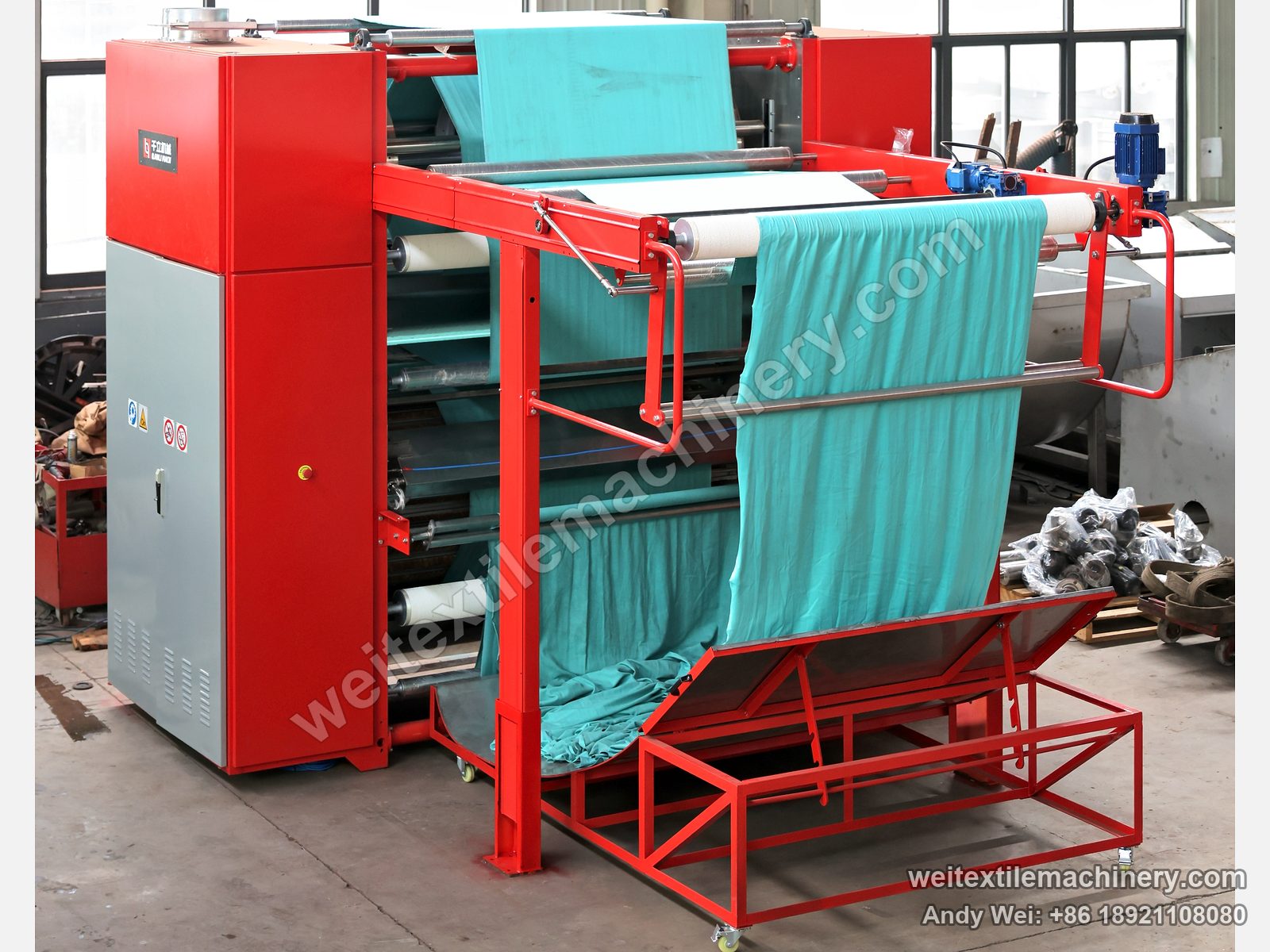
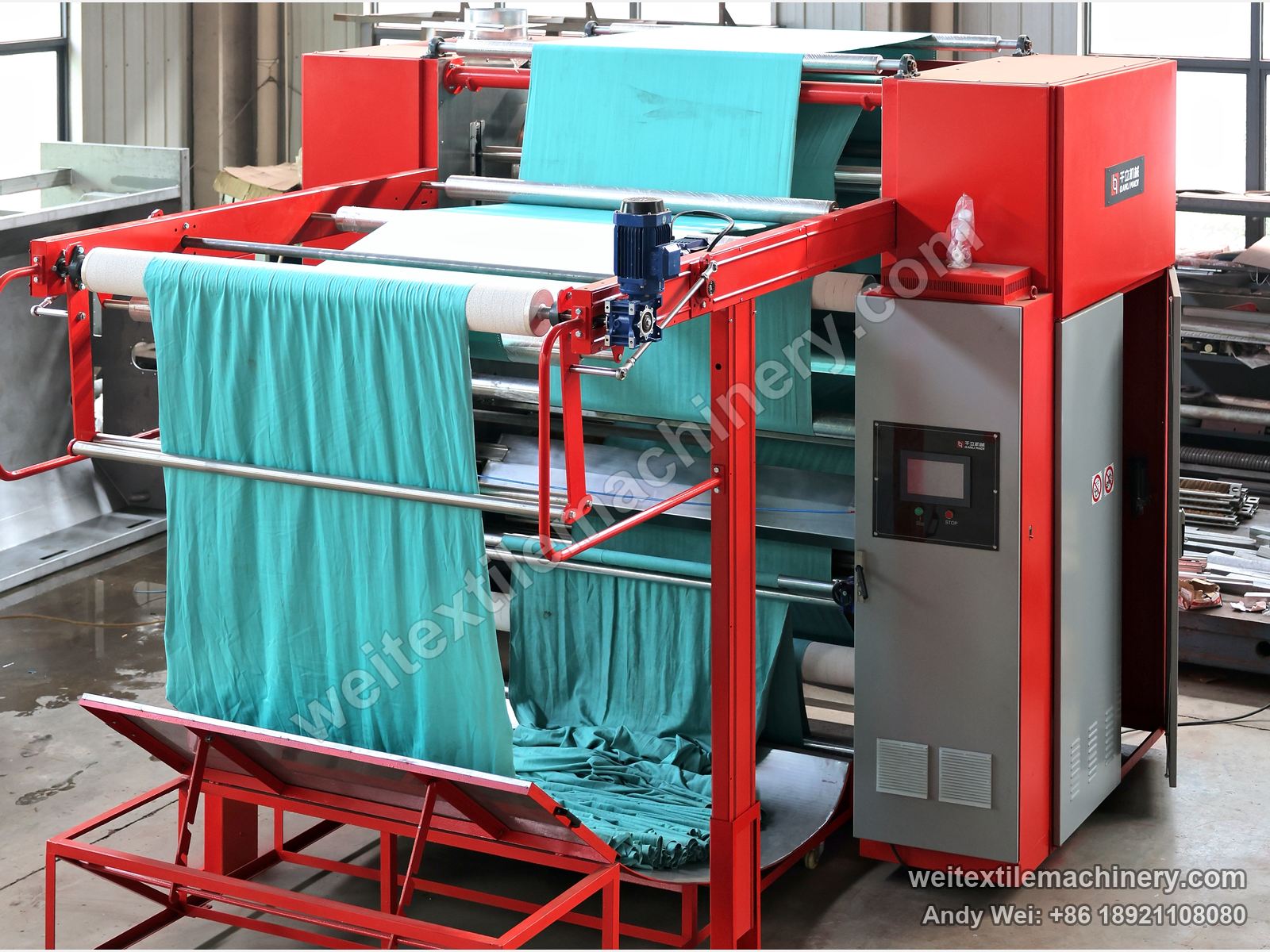
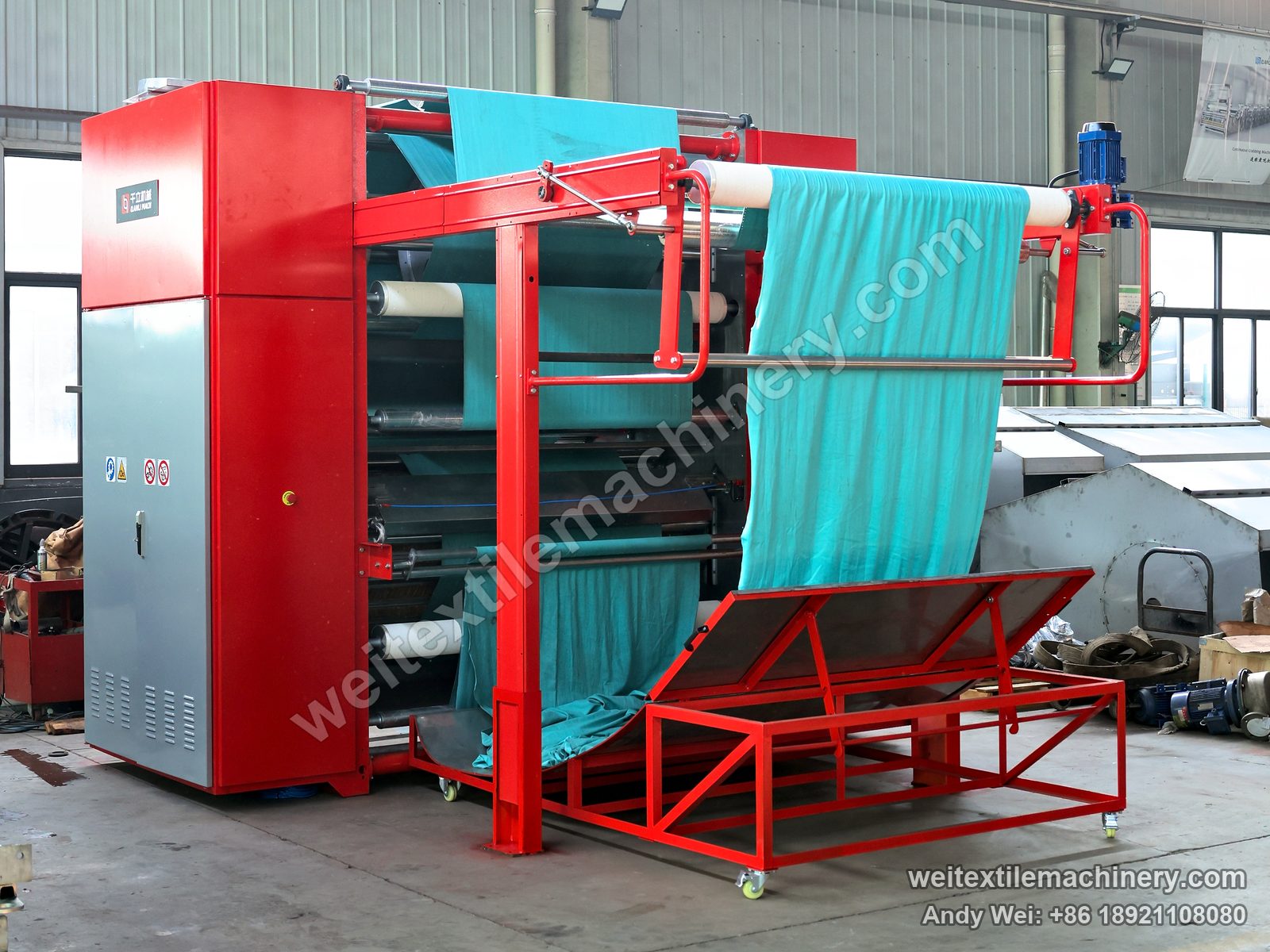
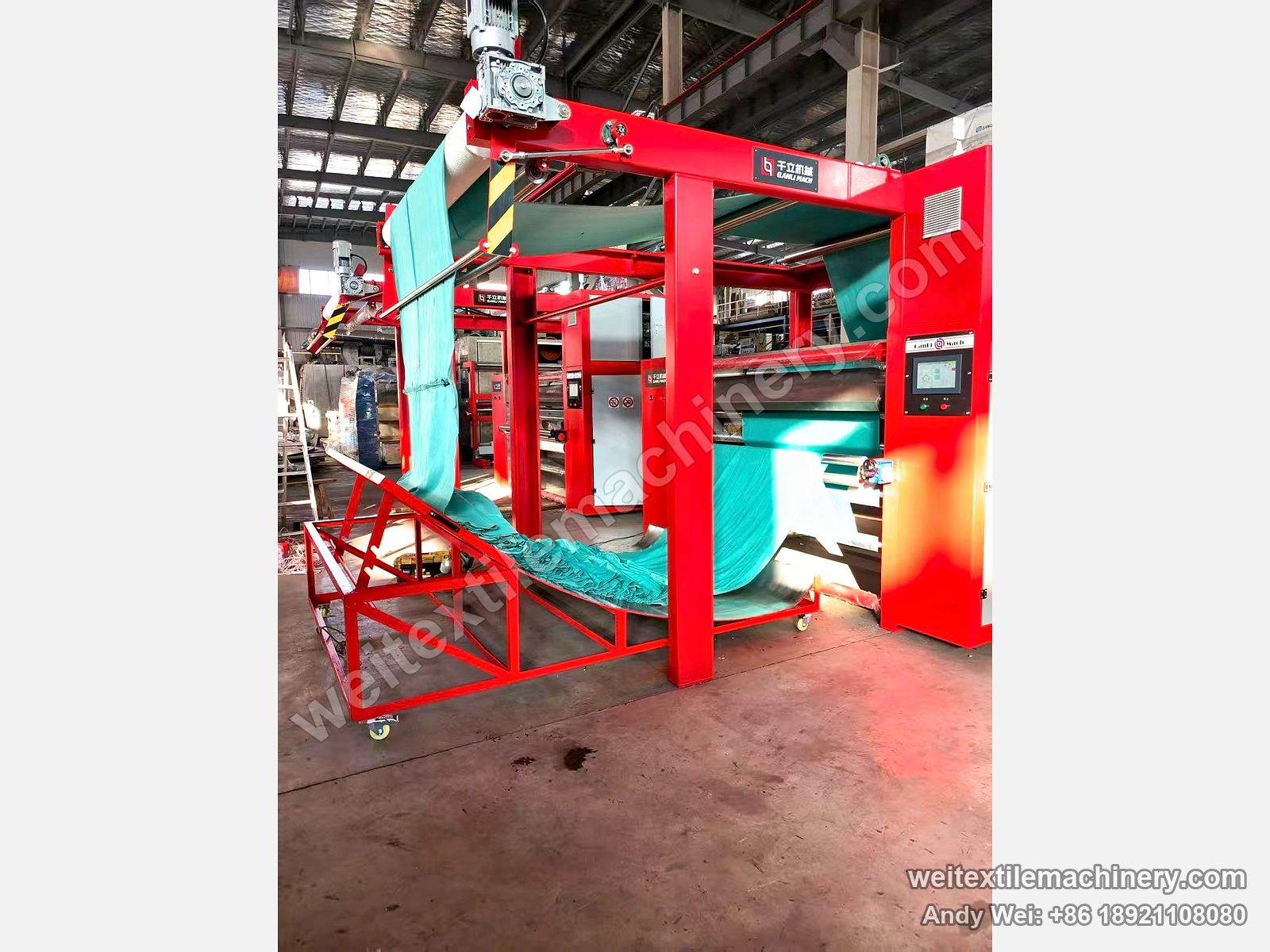
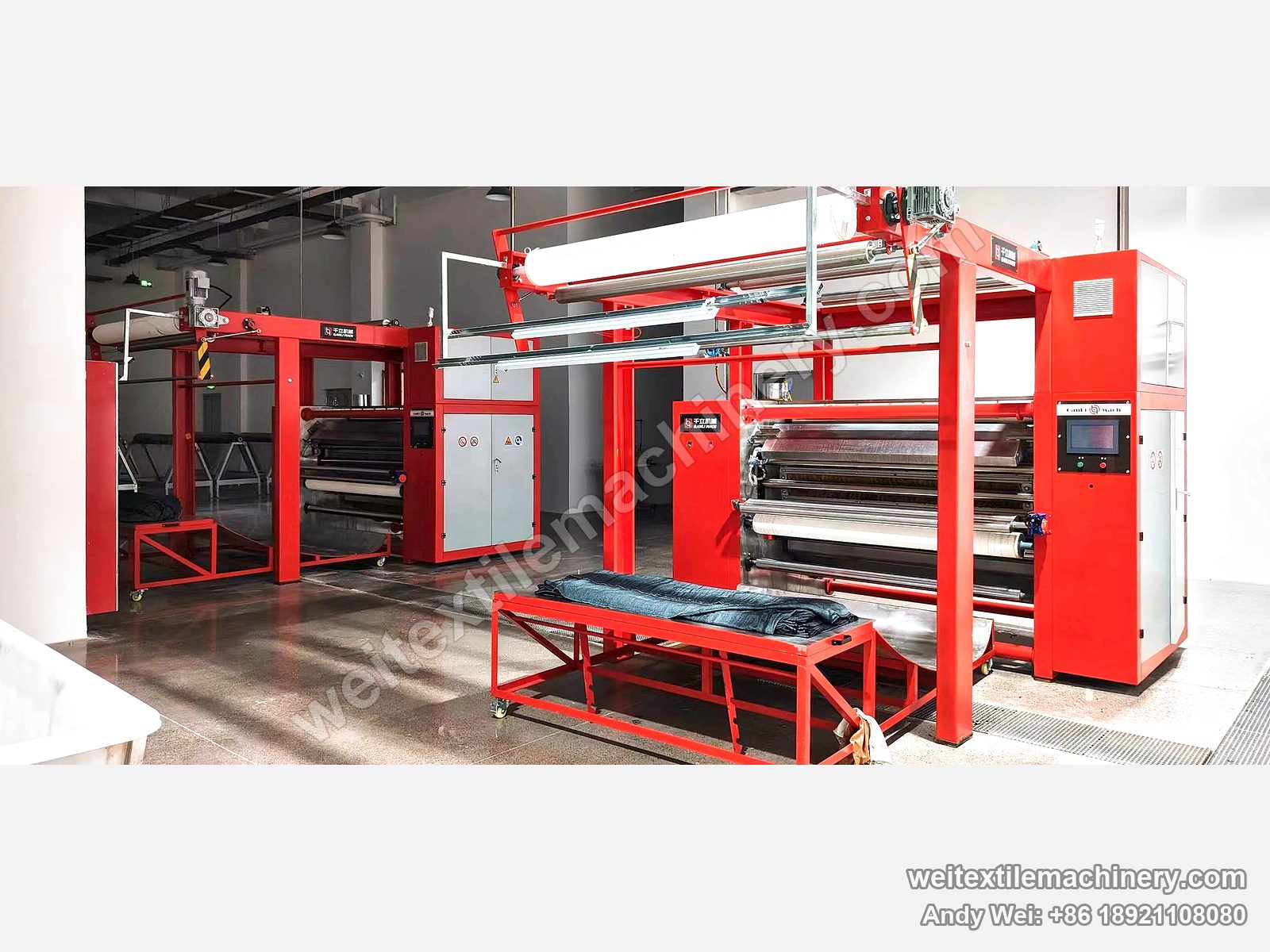
Double-drum version, full view
Key advantages
- QL Multi-Contact Adjustable Raising System — 4 contact points on each cylinder; the contact distance between fabric and teasels is adjusted automatically by computer
- Traversing cylinders · inverter-controlled traverse — rotation speed and traverse rate set separately for the upper and lower cylinders — even raising, a controllable water-wave effect
- Vertical double cylinder · one face or both — raises one face or both faces at once, with the sequence selected on screen — double-face qualities finished in a single pass
- Natural or metallic teasels — the two types are interchangeable on the same machine
Fabric results (before / after)
Threading diagrams
QL Multi-Contact Adjustable Raising System
- Multi-point contact — 4 contact points on each cylinder bring the fabric against the teasels at several places; the contact distance is adjustable
- Automatic adjustment by computer — the contact distance is adjusted automatically, and the actual position of each contact point is shown on screen
- Positions stored with the recipe — contact-point positions are stored with each recipe and restored when the recipe is recalled
- Speed and traverse set separately — cylinder speed, fabric speed and traverse rate are each set on their own, and the upper and lower cylinders are independent of one another; the traverse rate is inverter-controlled and controls the water-wave effect
- Tension set section by section — feed, draw and delivery are driven independently, and the fabric tension of each section is set separately
Product overview
The WPF-CG raises the fabric and lays its pile on teasel cylinders, working in the wet state. The nap comes up fine and dense, the handle full, the weave concealed.
Each cylinder has 4 contact points, and the contact distance between fabric and teasels is adjusted automatically by computer. The cylinder traverses as it turns; rotation speed and traverse rate are set separately. Raising is even.
With the optional water trough and light mangle, the machine produces water-wave fabrics; the traverse rate is inverter-controlled and controls the water-wave effect. Three configurations are available — single cylinder, vertical double cylinder and multi-cylinder line — each with natural or metallic teasels.
Applications
Key specifications
| Working width | 1,800–2,200 mm |
|---|---|
| Fabric speed | 0–30 m/min |
| Cylinder speed | 50–100 rpm, adjustable |
| Cylinder traverse | 60 mm |
| Teasels | Natural / metallic |
| Number of cylinders | Single cylinder: 1 · Vertical double cylinder: 2 · Multi-cylinder line: by number of units |
| Installed power | Vertical double cylinder: 25 kW |
| Overall dimensions (L × W × H) | Vertical double cylinder: 7,800 × 3,600 × 3,100 mm |
Optional features
- Water trough and light mangle — for water-wave fabrics
- Spray unit, steam spray box
- Automatic batching and unbatching unit — with A-frame
- Fibre suction fan, mist extraction fan
Full configuration notes, the complete feature list and selection advice — put together for your line and sent straight to you.
Request the full technical fileAll technical parameters stated in this document are measured under ideal operating conditions; actual performance may vary with fabric characteristics, process settings and on-site conditions. The manufacturer reserves the right to introduce technical improvements without prior notice.
Pre-owned machines for this station
Pre-owned European machines for the same station — fully rebuilt to order, and upgraded if you wish.
Common problems in wet finishing
Real questions from the mill floor — and how we answer them.
What's the difference between a napping machine and a raising machine?
In trade usage a napping machine usually means wire raising with card-clothed rollers, while raising machine is the general term for any machine that hooks fibre ends up into a pile, teasel raising included.
How does a teasel raising machine work?
A teasel raising machine runs the fabric repeatedly under a rotating cylinder set with natural teasel heads: the burrs are covered in fine hooked bracts, and as the cloth passes the hooks catch fibre ends and draw…
What were teasels historically used for in wool cloth raising?
Historically, teasels were the traditional tool European woolen mills used to raise a nap — dried teasel heads mounted in wooden frames, and later on rotating cylinders (gig mills), drawn repeatedly across the fabric…
Which manufacturers make wool raising machines?
Very few makers anywhere build natural-teasel raising machines; wire raising machines have more makers, mostly in Europe and China.
How does a textile napping/raising machine work?
The general principle behind raising equipment is to use pins or teasel burrs to repeatedly hook and pull fibre ends up from the fabric surface, drawing them out into a raised pile layer.
What types of raising machines are there?
Raising machines fall into two main types by the medium that does the raising, natural teasel heads or steel pins, and both can sit on one woollen finishing line, each for a different effect.
What can the WPF-CG do for your line?
Tell us your fabric, weight and output — we will come back with a process proposal and a quotation.