Miyuki Keori, Japan: a worsted mill founded in 1905 accepts its tops backwashing line
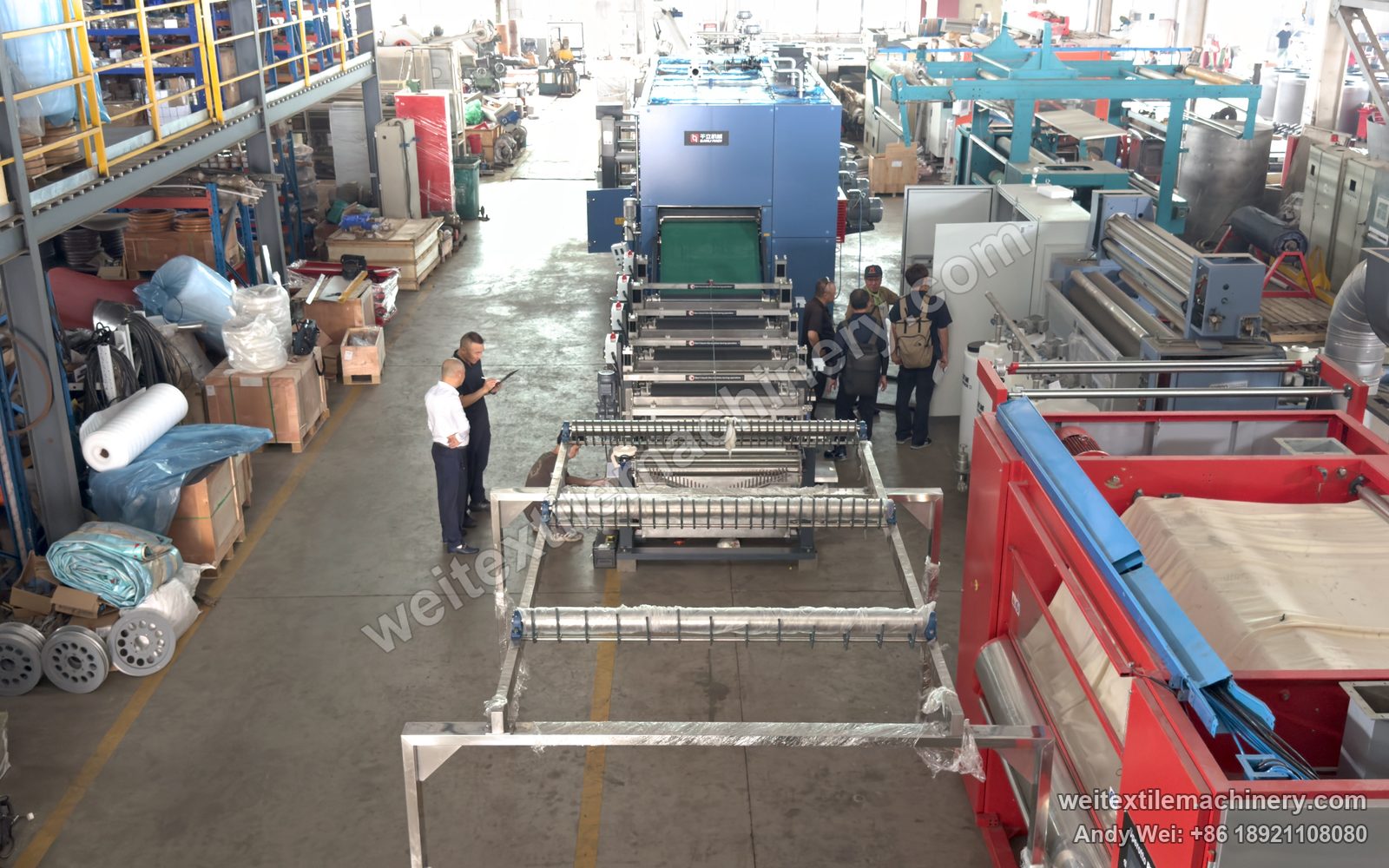
A Nagoya worsted mill, making cloth since 1905. On 26 September 2026 its team came to our plant in Wuxi and accepted a 36-end WPF-MTFX tops backwashing line, section by section.
The brief
Miyuki Keori was founded in Nagoya in 1905. It makes fine worsted suiting for men, and takes it all the way from yarn to the finished suit.
Before spinning, dyed tops need one more wash: loose dye and leftover auxiliaries come out, lubricant and antistat go in at line speed, and the tops are dried and wound. For this step Miyuki chose our WPF-MTFX tops backwashing line: 36 ends side by side, washing, drying and ball winding in one line.
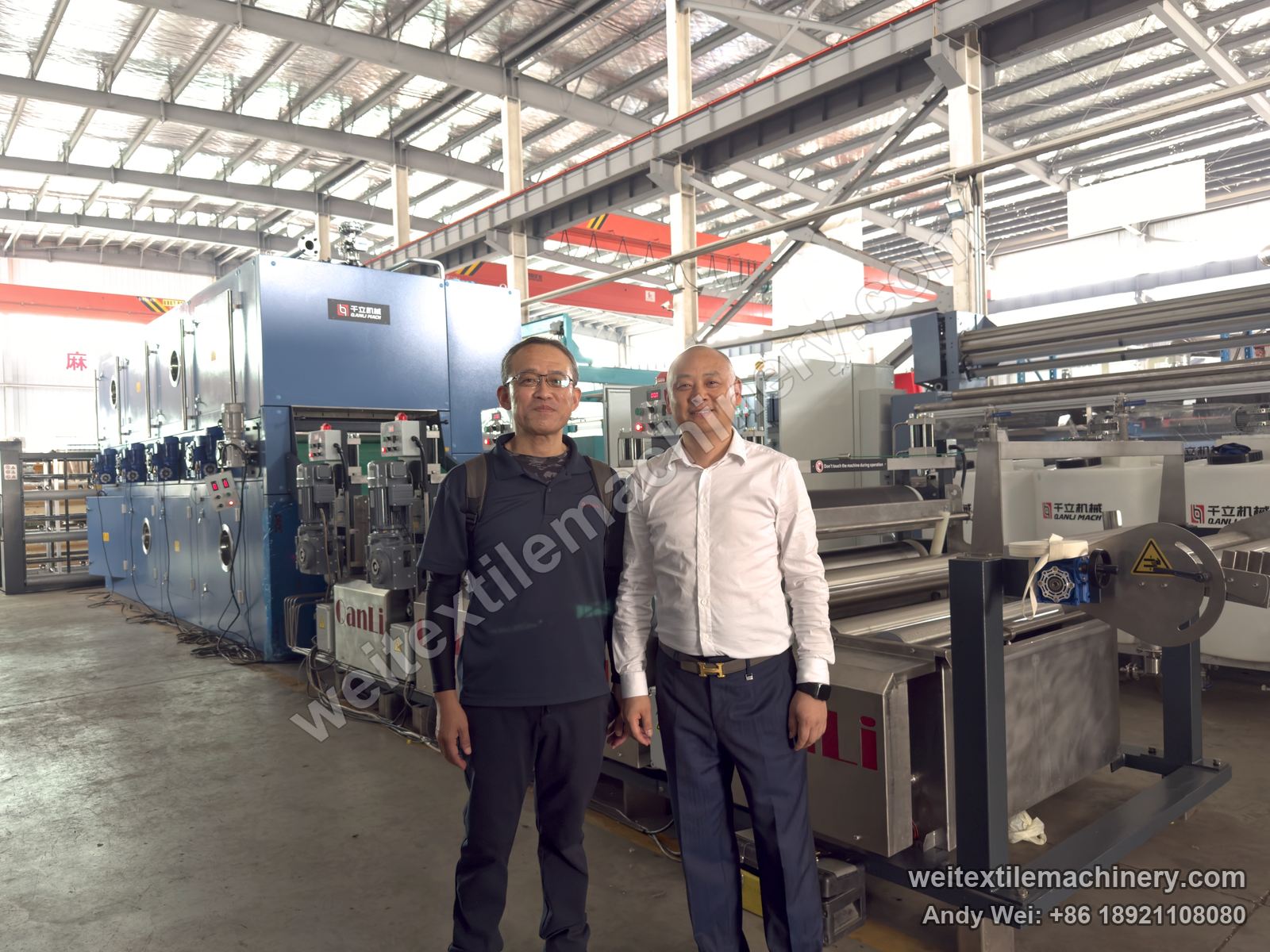
On 26 September 2026, before the line left our plant, Miyuki’s team came to Wuxi and accepted it, section by section, from the creel to the ball winder.
On the day
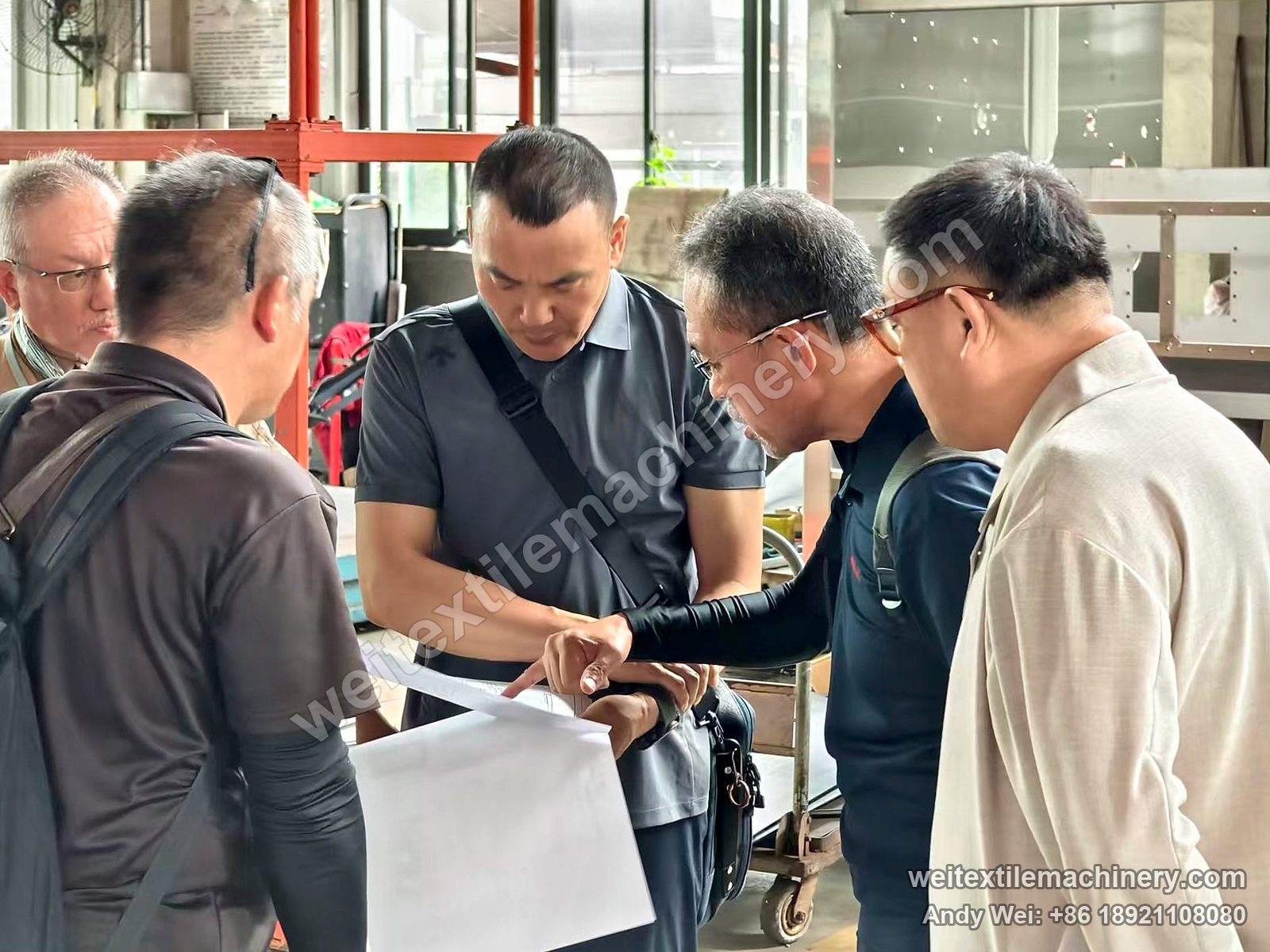
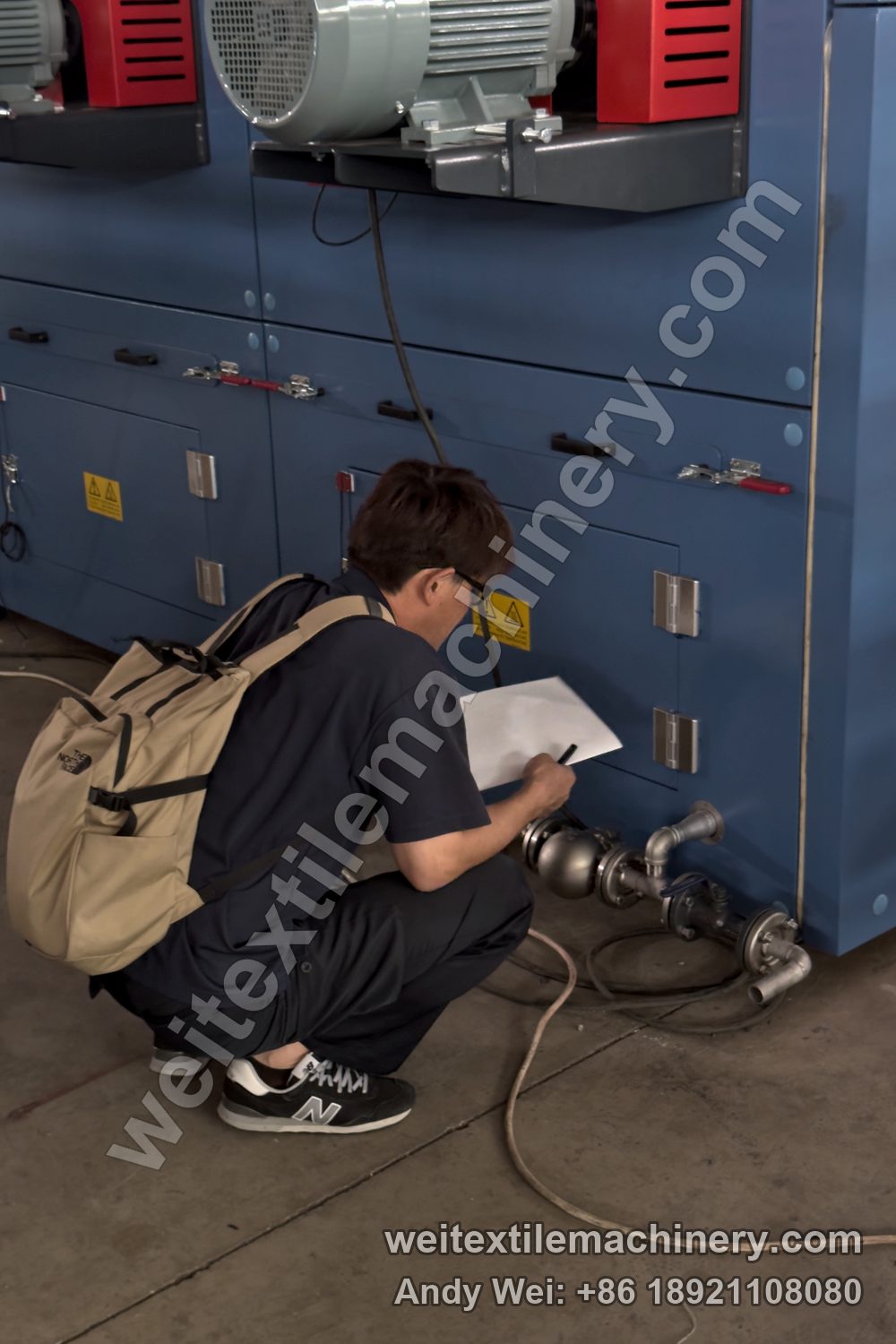
Miyuki’s team walked the backwashing line from end to end, crouched to look at the bowls and pipework, and went through the documents with our engineers point by point.
Also on their list that day
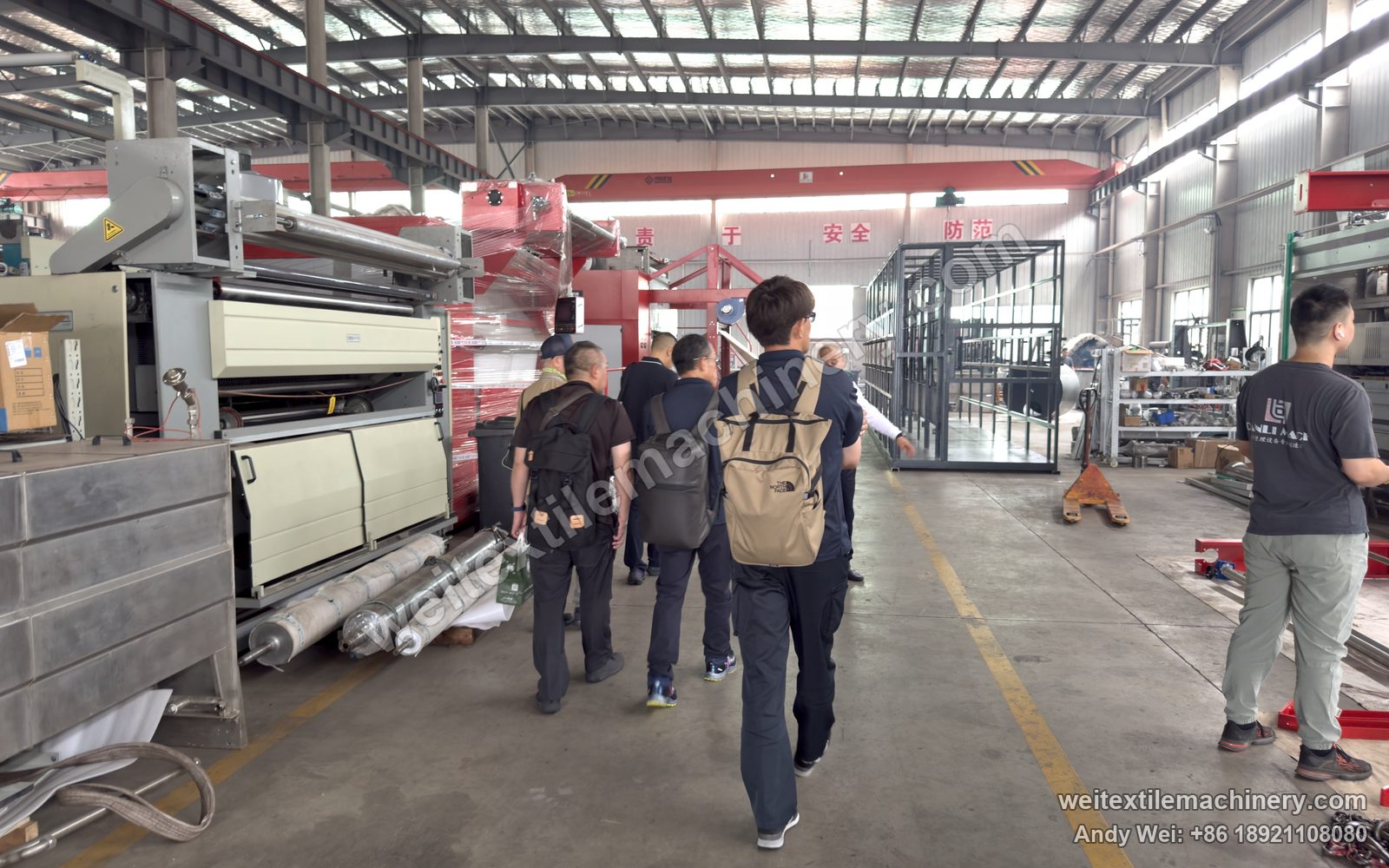
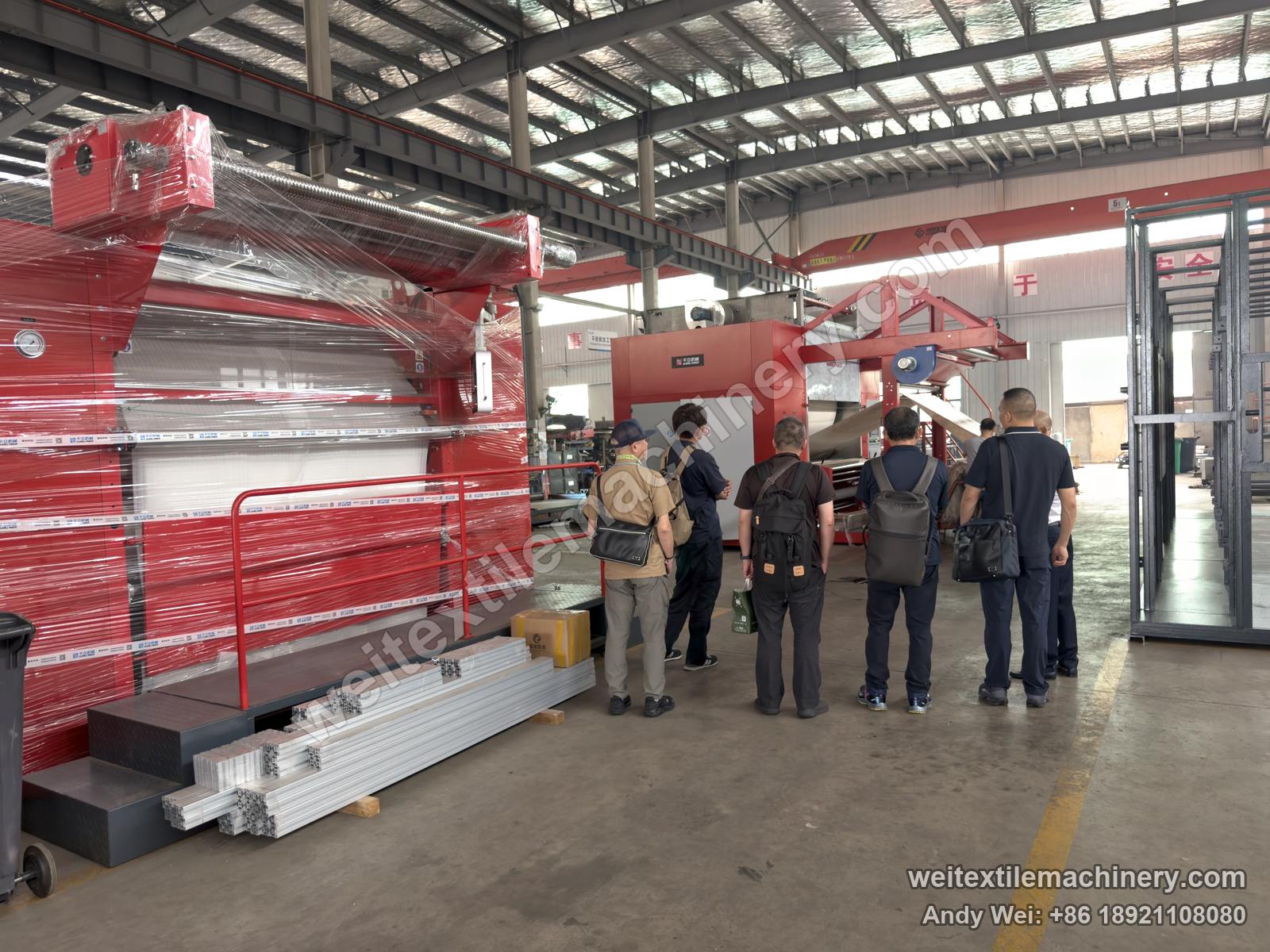
After the acceptance, they walked on through the plant. They asked about our four-channel scouring and milling machine, and in the assembly area we took them through how our continuous and discontinuous decatizing machines are built.
Planning a tops backwashing line?
We start from your tops and your output, then set the number of ends, bowls and drying sections.