
Discontinuous Open Width Washing Machine
WPF-JXPX
Discontinuous Open Width Washing Machine · Engineered with the QL Double-Nip Spray Washing System
The machine, up close
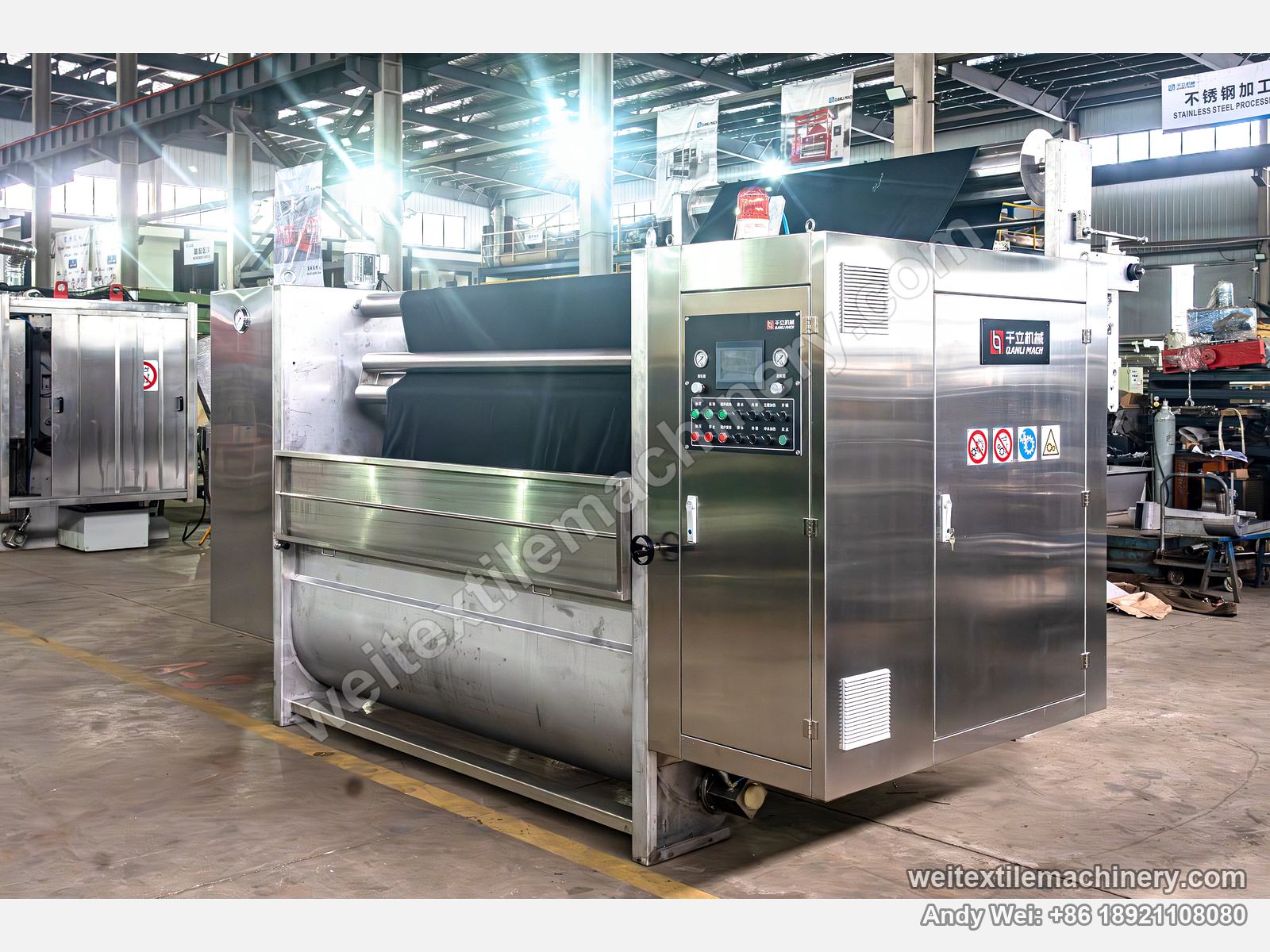
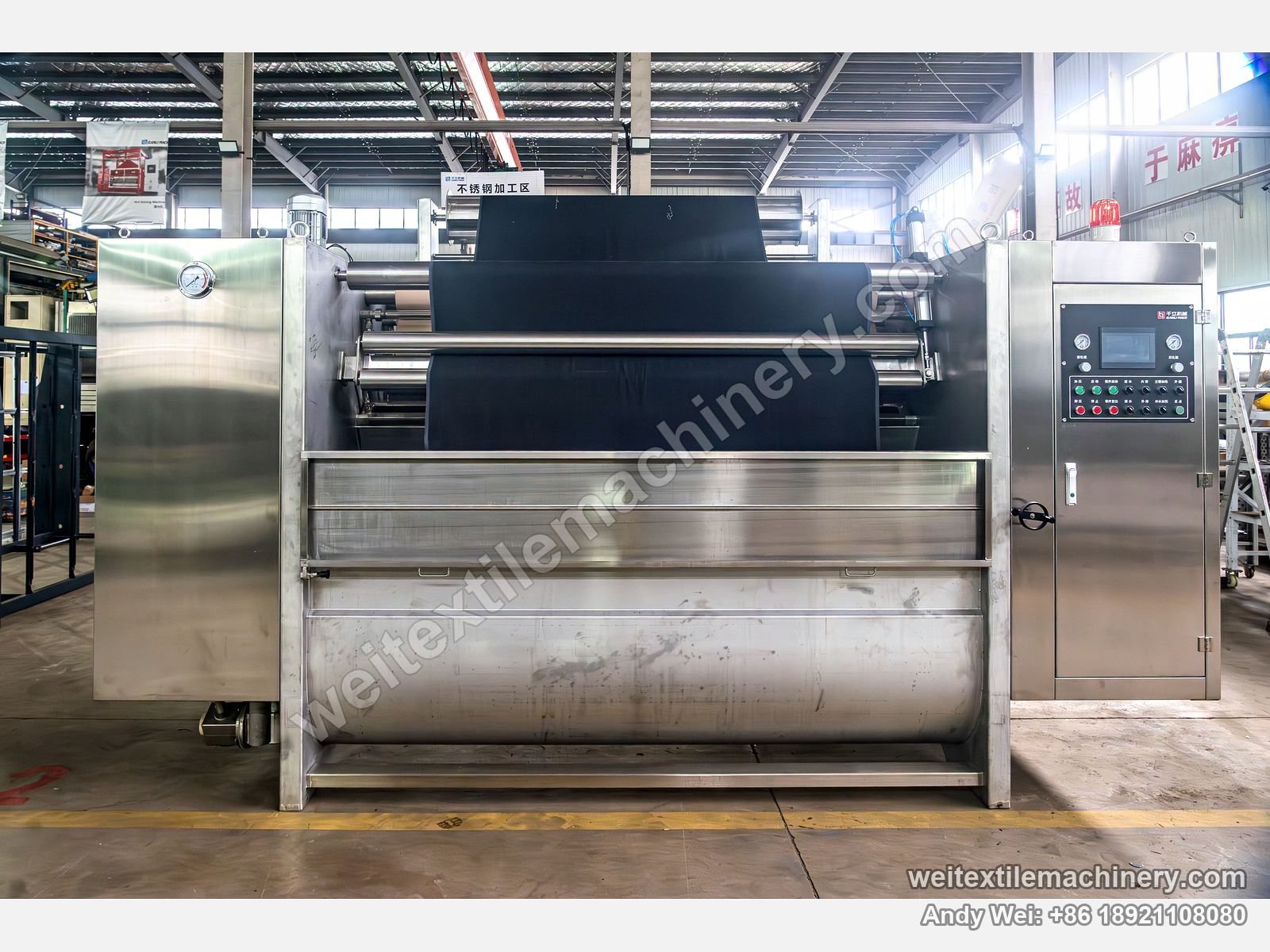
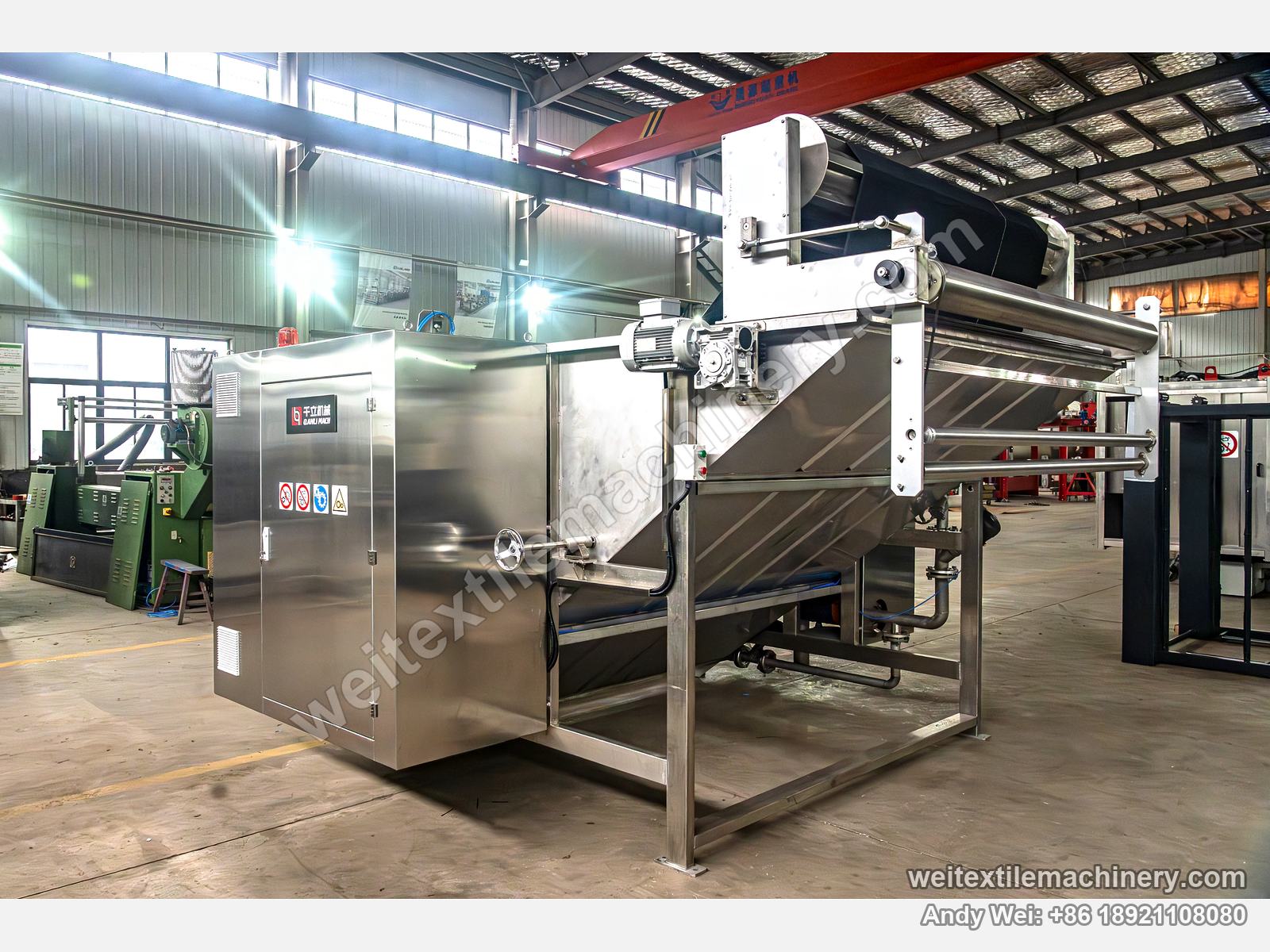
Full view, curved trough
Key advantages
- QL Double-Nip Spray Washing System — two pairs of squeeze rollers in series, with high-pressure sprays on face and back ahead of each pair; the sprays rinse soil off the surface and the two nips press soil-laden liquor out from within the fabric — surface and interior washed clean together
- Endless Loop · Open-Width Circulation — the whole piece is sewn end to end into a loop and runs in open width throughout, never gathered into rope form — none of the creases of rope scouring, even treatment, the weave kept clearly defined
- High-Pressure Side Sprays · Fabric Spread Flat — high-pressure spray pipes at either side of the machine spread the fabric flat with water jets, outwards towards both selvedges — washed fabric comes out free of curled selvedges
- Spreader-Roller Opening · Guide-Roller Centring — the spreader roller opens the fabric out across its width while the guide roller keeps it running centred — flat across the full width into the nips
Fabric results (before / after)
Threading diagrams
QL Double-Nip Spray Washing System
- Face-and-Back High-Pressure Spraying — a spray frame ahead of each pair of squeeze rollers sprays the face and back of the fabric at high pressure, rinsing away surface soil and dust
- Two Squeeze Nips in Series — on every circuit the fabric passes through both pairs of squeeze rollers in turn, each nip pressing out the liquor held within the fabric, laden with dissolved oily soil; roller pressure is adjustable
- Hot-Liquor Circulation — the liquor in the tub is heated by direct steam, a pump circulates it and its temperature is controlled automatically; with the liquor hot, spinning oil and oily soil are more readily emulsified by the detergent and carried away
Product overview
The WPF-JXPX joins the whole piece end to end and keeps it circulating in open width throughout the wash — the fabric is never gathered into rope form, eliminating the creases that conventional rope scouring leaves behind. Even treatment, with the weave left clearly defined.
Washing is carried out by the QL Double-Nip Spray Washing System: ahead of each pair of squeeze rollers, high-pressure sprays play on the face and back of the fabric, rinsing away surface soil and dust; on every circuit the fabric passes through two nips, which press out the liquor held within the fabric, now laden with dissolved oily soil. High-pressure spray pipes at either side of the machine spread the fabric flat and the spreader roller opens it out across the width — washed fabric comes out free of curled selvedges.
Suited to open-width washing of wool and wool blends, and especially well suited to silk, mohair and synthetic-fibre fabrics — greige fabric is cleaned of spinning oil, size and soil; wool fabric, once milled and scutched, is washed free of soap liquor and then passes in open width straight on to crabbing.
Applications
Key specifications
| Working width | 2,000 mm |
|---|---|
| Speed | 0–100 m/min |
| Maximum batch load | 180 kg |
| Heating | Direct steam heating |
| Installed power | 6 kW |
| Overall dimensions (L × W × H) | 4,000 × 3,200 × 2,740 mm |
Full configuration notes, the complete feature list and selection advice — put together for your line and sent straight to you.
Request the full technical fileAll technical parameters stated in this document are measured under ideal operating conditions; actual performance may vary with fabric characteristics, process settings and on-site conditions. The manufacturer reserves the right to introduce technical improvements without prior notice.
Other machines for the same station
This station can be done in more than one way. Each suits a different case — choose by your fabric and output.
Wool-finishing machines used together on the same route
On the process route these wool-finishing machines sit on the same branch as this one and run in sequence — together they complete the step.
Common problems in wet finishing
Real questions from the mill floor — and how we answer them.
What is scouring in wool and textile finishing, and how is the process done?
Scouring is the wet-finishing step that removes impurities left on greige fabric — spinning lubricant, sizing agent, machine-oil stains and the like — and it is a different stage from raw-wool scouring, which removes…
How should scouring and milling be arranged — separate machines (mill then scour), a combined scour-and-mill machine, or mill then open-width scour?
All three set-ups are valid, and the choice depends on the process goal.
Should scouring be rope-form (WPF-XN) or open-width (WPF-JXPX)?
The choice comes down to whether the fabric is likely to crease under rope processing.
Does open-width washing get the fabric clean?
Yes — by spraying both faces and squeezing twice.
Rope scouring presses in creases and washes unevenly — can the fabric stay unfolded?
Yes — it is never gathered into rope form.
Where does scouring fit in the overall wool finishing process sequence?
Scouring usually comes right after fabric inspection and before crabbing, as the first main step of wet finishing — the greige fabric is washed clean of spinning oil, sizing and soil so it goes into crabbing in a…
What about curled selvedges, and wet fabric being stretched?
Both points have a dedicated structural fix.
After milling, we want to wash out the soap liquor in open width.
That is exactly one of its uses.
What can the WPF-JXPX do for your line?
Tell us your fabric, weight and output — we will come back with a process proposal and a quotation.